
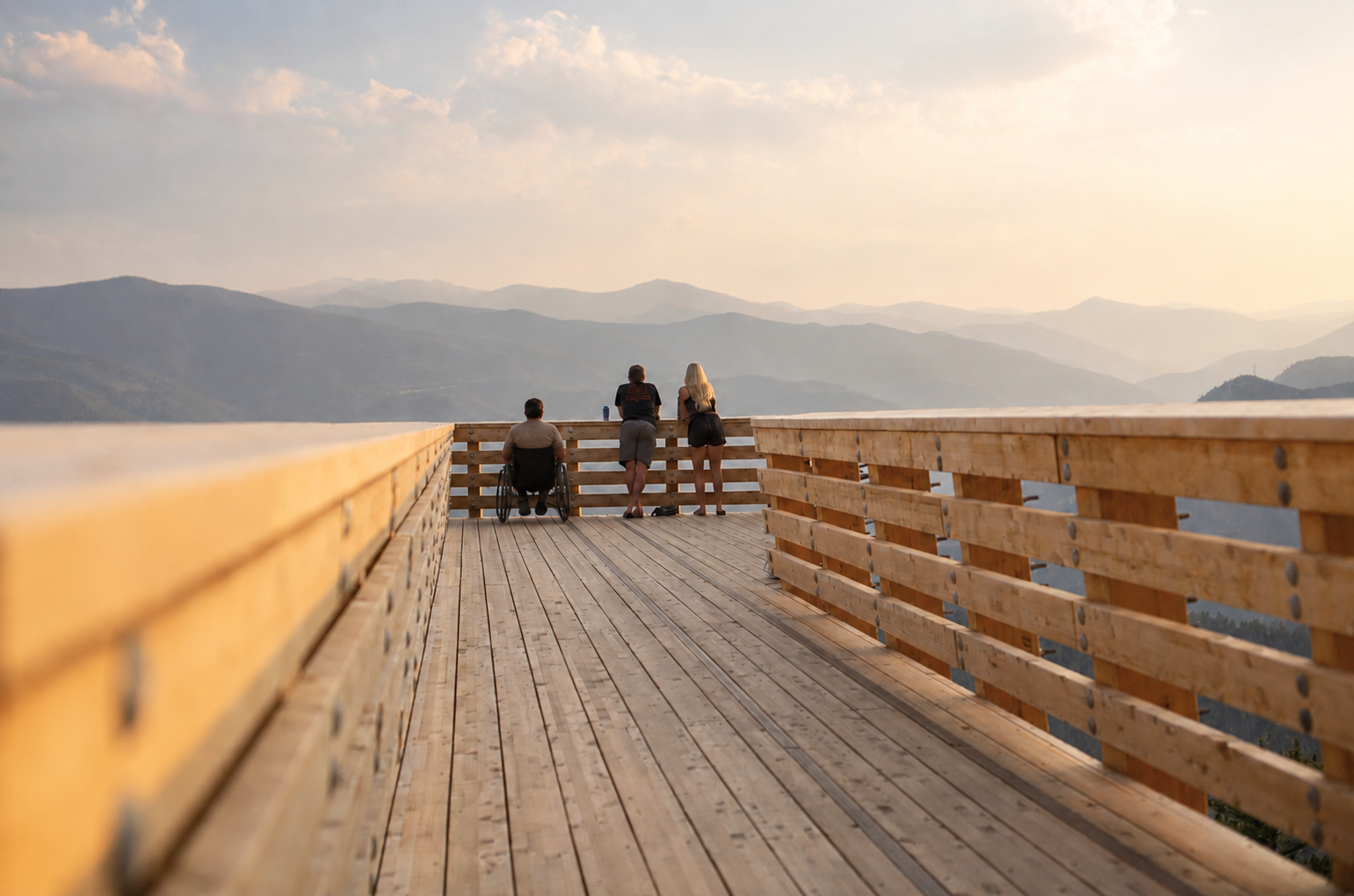
The visit you’re looking forward to might be a conversation over lunch, a view you can enjoy together or a little time getting to know a mountain town. Those interests are a good place to begin planning an accessible Clear Creek getaway. They help put the experience you want at the center of the trip.
Useful access information then helps bring that experience within reach. The distance from parking, the slope of a path or the layout of a restroom can matter as much as the attraction itself. Knowing those details gives you more freedom to choose how you’d like to spend your time.
Begin with what you’re curious about
Explore Clear Creek accessibility information alongside the places that interest you. You may want a town visit with several comfortable stops, a guided experience or an opportunity to enjoy the outdoors. Make a short list that reflects what you’d enjoy doing.
Access needs are personal. A description that helps one visitor may leave another with questions, and the word “accessible” can’t describe every part of a place. Treat the available information as the beginning of a conversation with the provider.
If you’re planning with someone else, ask which details would help them feel comfortable. Let them guide that part of the discussion, whether it concerns movement, communication, sensory conditions or the opportunity to take a break.
Get to know the experience before arriving
Contact the business or activity provider and describe the arrangements that matter to your visit. Questions about surface, width, steps, slopes and seating can make an outdoor stop easier to assess. At an attraction, ask about the full visitor route, including entrances, boarding, transfers and restrooms.
Specific information is useful. Measurements and current photographs may answer questions that a general description leaves open. If noise, lighting or crowds affect your experience, ask what to expect and whether there are quieter periods or places to pause.
These conversations are part of making the visit your own. Once the essential details are settled, you can look forward to the story you’ll hear, the place you’ll see or the people you’ll spend time with.
Start with what makes a visit work for you
Access is personal. The information one traveler needs may be different from what helps another decide. Begin with the details that affect your own comfort and participation: walking or rolling distance, surfaces, rest breaks, seating, communication, sound, lighting or the availability of a quiet space. You can use those priorities to compare experiences without having to fit yourself into a general description.
If you’re planning with someone else, ask what they want help researching and what they prefer to arrange directly. Keep the traveler at the center of the conversation. A companion’s enthusiasm can be useful, but it shouldn’t replace the person’s own judgment. The most welcoming plan is one built around the people coming, with enough clear information for them to choose confidently.
Ask about the whole journey through a place
An accessible entrance is one part of a visit. Ask how you get from parking or drop-off to the entrance, then from there to the main experience, seating and restrooms. Find out about slopes, thresholds, steps and changes in surface. If you use mobility equipment, ask for dimensions and photographs when those would help you assess the layout. A clear description is more useful than a reassuring label.
Ask whether the route changes with weather, snow, construction or a different tour format. Historic buildings and mountain settings can present specific constraints, and current details matter. If a staff member is unsure, ask who can confirm the information. You deserve a concrete answer that lets you make your own decision rather than having to discover an important barrier after arriving.
Match an attraction to the experience you want
For a tour, ask about duration, standing time, walking surfaces and opportunities to pause or leave early. Find out whether information is delivered through spoken commentary, printed material or another format. Ask about lighting, enclosed spaces, loud sounds and crowd arrangements when those affect your comfort. Share only the information needed to discuss the practical accommodations you want.
For a railroad experience or another attraction involving boarding, speak with the operator about the specific departure and equipment arrangements. Confirm what assistance is available, what advance notice is needed and which parts of the experience you can participate in. Don’t assume one departure has the same setup as another. A careful booking conversation helps make the outing something to look forward to.
Research outdoor routes in useful detail
When considering time outside, look beyond distance alone. Surface firmness, width, grade, cross-slope, obstacles and the availability of turning or resting places can all matter. Ask about the route from the parking area, not only the main section of path. Look for current information and recent photographs, and decide which details you need verified before traveling.
Conditions can change after rain, snow or maintenance. A route that worked well on a previous visit may feel different this time. Keep a suitable alternative and a comfortable turnaround plan. Outdoor time can take many forms, including a permitted picnic area, a viewpoint with verified access or a shorter section of a route. Choose the version that gives you room to enjoy being there.
Make meals and breaks part of the access plan
Contact a restaurant about the entrance, table arrangements, restroom access and the route between them. If you need a particular seating setup or lower-stimulation time, ask what the business can accommodate. Confirm dietary requirements directly, including preparation questions when relevant. You can settle these details before the group becomes hungry and ready to sit down.
Plan breaks because they support the visit, not only after someone becomes tired. Choose a clear place to regroup and keep travel between stops realistic. A café, lodging room or another suitable space can give you time to reset before the next experience. There’s no reason a pause should feel separate from the getaway. Conversation over a warm drink can be one of its most enjoyable parts.
Confirm lodging with specific questions
When booking a stay, ask about the actual room and bathroom you would receive. Request details about the entrance, bed setup, maneuvering space, shower or bathing arrangements and the route to shared areas. Confirm parking and any assistance you expect to use. Photographs and measurements can help, but they should match the room being reserved rather than a general example.
Ask the host to record the arrangements you’ve agreed on and keep a copy with your reservation details. Consider the morning and evening as well as the room itself: where will you eat, how will you return from an event and what happens if weather changes? A comfortable base can reduce the amount you need to solve during the stay.
Build a plan with room to adjust
Choose one main experience and allow enough time on both sides for travel, entry and breaks. Keep the next stop nearby if that makes the visit easier. Avoid stacking several timed activities before you know how the first one will feel. A flexible afternoon lets you extend something you’re enjoying or choose a quieter option without disrupting a long chain of bookings.
Save addresses, contact information and access confirmations where you can use them offline. Share the plan with companions in the format that works for the group. If arrangements change, contact the business and confirm the revised details. Good preparation can make the visit feel more spontaneous once you arrive, because you’ve already answered the questions that matter most.
Let your own experience guide the next visit
After the trip, note the details that worked well and anything you would want to verify next time. A particular entrance, room setup or tour format may be useful to remember. If you choose to share feedback, describe the actual conditions and date of your visit. Specific observations can help businesses improve their information and give other travelers a clearer starting point.
You don’t need to see every attraction to have a meaningful mountain stay. A well-matched experience, a comfortable meal and time with the people you brought can be a full visit. Adventure belongs to everyone, and the planning should support your choices. Come with the questions you need answered and the curiosity you’d like to follow. There’s room to build a Clear Creek story that feels like yours.
Make the spaces between stops comfortable
Use maps and routes to understand how your plans connect. A short distance on a map can still include a difficult surface or a change in elevation, so confirm the route as well as the destination.
Choose somewhere to eat with the same attention to entrances, seating and restrooms. Leave time between commitments and keep another appealing option ready if weather or temporary maintenance changes access.
Adventure belongs to everyone. In practice, that means making room for different ways to participate and giving people the information they need to decide. Your Clear Creek visit can begin with the thing you’re interested in and grow at a pace that feels comfortable to you.